
loading

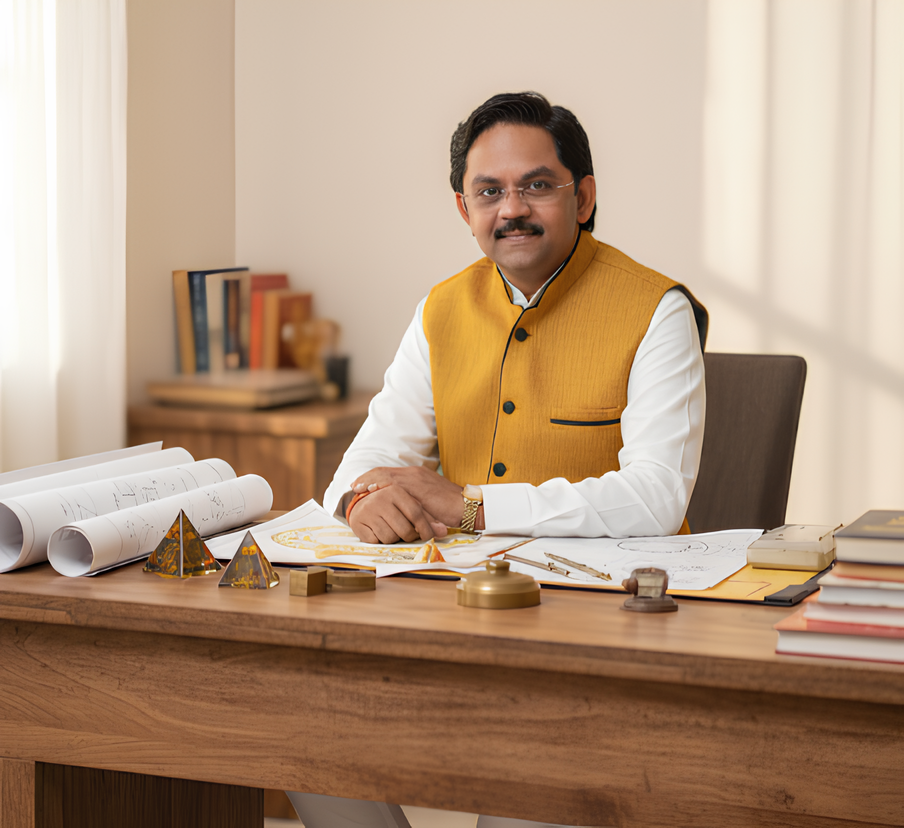
About Jaydevji


Jaydevji’s journey into the world of spiritual sciences began at an early age. Fascinated by the ancient knowledge of the Vedas and the mysteries of cosmic energies, he devoted many years to studying sacred scriptures, astrology, and Vastu Shastra under the guidance of experienced scholars and spiritual mentors. Through dedication, discipline, and continuous learning, Guruji developed a deep understanding of how planetary movements and environmental energies influence human life.

Over the years, his guidance has helped people overcome many life challenges, including obstacles in career, relationships, financial stability, and personal growth. His ability to analyze problems and suggest practical remedies has earned him respect and trust among those who seek spiritual guidance.

Contact Jaydevji

+(91) 84315 69661

Are You Experiencing Challenges in Your Life?


Discover the Real Reason Behind Your Difficulties


How JK Vastu Consultation Works?


  1. Fill out the consultation form with your basic details.
  2. Our expert team will connect with you as soon as possible.
  3. We carefully study your property layout and the issues you are facing.
  4. We identify the underlying Vastu imbalance causing the problem.
  5. We guide you with practical and effective Vastu remedies for positive transformation.
Consultation Form


    Find Your Lucky Direction


    Our Services

    Benefits And Features

    1000+ Happy & Satisfied Customers

    Quick & Experienced Guidance

    Vastu Readings Based On Your Astrological Signs

    Helped 300+ Students To Achieve Their Dream

    What Our Customers Say

    At JK Vastu, client satisfaction is at the heart of everything we do. Our Vastu consultations have helped individuals, families, and businesses experience positive transformations in health, wealth, relationships, and overall well-being.
    zodiac sign image

    “After implementing the Vastu corrections suggested by JK Vastu, we noticed a significant improvement in our home environment. There is more peace, better sleep, and overall positivity.”

    Ramesh K.

    Software Engineer, Bengaluru

    zodiac sign image

    “Our business was facing constant losses despite our efforts. JK Vastu guided us with simple yet effective changes. Within a few months, we saw growth and stability.``

    Priya S.

    Business Woman, Mumbai

    zodiac sign image

    “The consultation was very detailed and easy to follow. The remedies were practical and didn’t require major structural changes. Highly recommended”

    Ankit Roy

    Consultant, Bengaluru

    zodiac sign image

    “JK Vastu provided excellent guidance for our new home construction. Everything was explained clearly, and the results have been very positive.”

    Vikram N

    IT Consultant, Hyderabad

    Prev
    Next

    Our Latest Blogs

    Vastu Tips to Attract Money

    For millennia, Vastu Shastra has been revered across the Indian subcontinent as a mystical blueprint for designing spaces that attract health, happiness, and immense wealth. Often dismissed by modern skeptics as mere superstition, this ancient architectural doctrine is experiencing a profound resurgence. Today, researchers, architects, and environmental psychologists are uncovering the tangible, scientific reasoning behind Vastu guidelines and their profound impact on architectural design [1.18]. Far from being a collection of arbitrary, mystical rules, Vastu is essentially an early form of environmental science that synchronizes human habitats with the laws of nature—such as the earth’s magnetic fields, solar energy, and the mechanics of wind flow. By optimizing our built environment, we inadvertently optimize our mental and physiological states. When we talk about “attracting money,” we are fundamentally talking about cultivating a living environment that fosters razor-sharp focus, minimizes chronic stress, and enhances our capacity for productive decision-making. Wealth generation requires a clear mind, unburdened by ambient anxiety or poor physical health. By implementing Vastu principles, you are strategically engineering a space that supports peak human performance. This comprehensive guide explores the intersection of ancient Vastu Shastra and modern science, providing actionable, scientifically-backed tips to transform your home into an engine of financial prosperity.     The Power of the North-East: Solar Orientation and Mental Clarity     In the traditional framework of Vastu Shastra, the North-East direction is considered exceptionally auspicious. It is ruled by Lord Kuber, the Hindu deity of wealth and prosperity, making it the ideal location for placing a Kuber Yantra or simply keeping the area completely free of heavy obstructions. According to a comprehensive guide by Square Yards, ensuring this zone remains open allows for the unhindered flow of prosperous energy into the house. From a scientific standpoint, the significance of the North-East quadrant is deeply rooted in solar architecture and geomagnetism. In the Northern Hemisphere, homes oriented towards the East and North-East receive the gentle, life-affirming rays of the morning sun.  As highlighted in the International Journal of Innovative Research in Technology, exposure to morning sunlight is crucial for regulating human circadian rhythms and boosting mood. The morning sun is rich in blue light, which naturally suppresses melatonin production and stimulates the release of serotonin, ensuring you wake up alert, energized, and ready to tackle complex financial challenges. Furthermore, ancient builders understood the subtleties of the Earth’s magnetic fields; aligning living spaces to minimize magnetic interference reduces physiological stress on the human body. By keeping the North-East spacious and well-lit, you are essentially maximizing natural light penetration, which elevates cognitive clarity and positions you for professional success.     Decluttering the Space: The Psychology of Cortisol and Wealth     One of the most fundamental rules of Vastu for money is to maintain a neat, organized, and thoroughly decluttered home. Vastu experts assert that wealth simply cannot reside in a space filled with dirt and disorganization, as clutter blocks the natural flow of cosmic energy. Today, modern environmental psychology has validated this ancient wisdom with startling precision. Clutter is not merely an aesthetic issue; it is a profound psychological stressor. Research detailed by Parker Coles Curtis demonstrates that a disorganized environment acts as a constant source of sensory input, leading to cognitive overload and significantly higher levels of cortisol, the body’s primary stress hormone. A seminal 2010 study examining family environments in Los Angeles, cited by Adult Mental Health, found that women who described their homes as cluttered experienced greater depressed moods and chronically elevated cortisol levels throughout the day compared to those with restorative homes. When your brain is constantly bombarded by the visual noise of unfinished projects and excess possessions, decision fatigue sets in. This mental exhaustion severely impairs your ability to make sound financial investments, negotiate deals, or focus on career advancement. By adopting the Vastu principle of decluttering, you reclaim control over your environment, lower your baseline anxiety, and free up vital mental bandwidth for wealth generation.     The Fluidity of Wealth: Water Elements and Biophilic Restorativeness     Water is a potent symbol of wealth in Vastu Shastra. To invite a steady stream of income, Vastu recommends placing small water fountains or aquariums in the North or East directions. Conversely, Vastu strictly warns against ignoring plumbing issues; a leaking tap is believed to symbolize money flowing out of your life, leading to severe financial instability. The scientific reasoning behind incorporating water into the home lies in the principles of biophilic design. Biophilia is the innate human desire to connect with nature, and integrating dynamic natural elements into our built environments has transformative effects on our well-being. According to Bluworld of Water, water elements add a dynamic visual and auditory dimension that creates a deeply serene atmosphere. The gentle sound of trickling water acts as “pink noise,” which effectively masks disruptive urban sounds and lowers physiological arousal, allowing the nervous system to relax. Furthermore, a report in the LA Times emphasizes that biophilic design features, such as indoor water installations, can significantly lower blood pressure and satisfy our biological need for natural connection. By consciously adding water elements to your home, you cultivate a restorative oasis that actively counteracts the burnout of the corporate world. And as for fixing leaks? Beyond the symbolic loss of wealth, ignoring water damage leads to structural degradation, toxic mold growth, and literal financial hemorrhaging through costly repairs and inflated utility bills.     Grounding Finances in the South-West: Stability and Security     If the North-East is the zone of dynamic influx, the South-West is the zone of retention. Vastu Shastra designates the South-West corner of a property as the “Earth” zone, symbolizing grounding, heaviness, and unshakeable stability. Consequently, it is heavily advised to place heavy furniture, cash lockers, safes, and critical financial documents in this quadrant, ideally with the safe doors opening towards the North to welcome wealth. From the perspective of architectural psychology, the concept of placing valuables in the most grounded, protected part of a structure makes perfect sense. The South-West corner is traditionally the least exposed to

    Simple Changes for Positive Energy

    The concept of “positive energy” often conjures images of metaphysical auras or esoteric wellness trends. However, modern science paints a highly quantifiable picture. In the realms of neurobiology, environmental psychology, and nutritional psychiatry, positive energy translates to metabolic efficiency, autonomic nervous system balance, and psychological resilience. It is the tangible output of optimized biological systems working in harmony.  By understanding the mechanical realities of our bodies, we can move past superficial platitudes and adopt evidence-based practices that fundamentally alter our experiences. Transforming your energetic baseline does not require monumental life overhauls; rather, it demands strategic alignment with human biology. Through scientifically backed adjustments to our mindset, environments, diets, and social interactions, we can leverage our evolutionary wiring to cultivate a vibrant state of being. We will explore how leveraging neuroplasticity, the gut microbiome, biophilic environments, somatic movement, and chronobiology can holistically upgrade your neurological and physical health.   The Neuroscience of Optimism: Rewiring the Default Mode Network   For decades, neuroscientists believed the adult brain was relatively fixed. Today, neuroplasticity-the brain’s ability to reorganize itself by forming new neural connections-is a foundational pillar of cognitive science. This proves our persistent thought patterns physically alter neural architecture, validating Hebb’s Law: “neurons that fire together, wire together.” Ruminating on negative thoughts strengthens pathways linking the amygdala to the Default Mode Network (DMN), a region associated with self-critical thinking and anxiety. Fortunately, intentional cognitive practices like reframing can disrupt these physiological loops. Focusing on gratitude stimulates the prefrontal cortex, the area governing executive function and emotional regulation. Cultivating stable positive affect can actually disrupt the adverse effects of neurodegeneration on cognitive plasticity in older adults, protecting executive function National Institutes of Health. These cognitive shifts literally rewire the brain for happiness, lowering cortisol and fostering a durable state of positive energy npnHub. By recognizing negative thoughts as biological habits rather than objective truths, individuals can construct a more resilient neurological landscape.   The Gut-Brain Axis: Fueling Vitality Through Nutritional Psychiatry   The food we consume dictates our emotional baseline through the gut-brain axis. This bidirectional network links our central nervous system to our enteric nervous system via the vagus nerve. Within the gut ecosystem, trillions of microorganisms produce a vast array of neurochemicals, including 90% of the body’s serotonin and a significant portion of its dopamine-both critical for mood regulation and sustained positive energy. A diet high in ultra-processed foods rapidly decreases microbial diversity and elevates systemic inflammation, correlating with depressive symptoms and brain fog. Conversely, incorporating prebiotic fibers and probiotic-rich fermented foods like kimchi, kefir, and sauerkraut encourages the proliferation of highly beneficial bacteria such as Bifidobacterium and Lactobacillus ZOE. These microbes ferment fibers to produce short-chain fatty acids (SCFAs) like butyrate, which strengthen the intestinal barrier and reduce neuroinflammation in the brain PMC. Increasing daily intake of diverse plant fibers and omega-3s supplies the microbiome with raw materials to enhance emotional resilience and cognitive clarity Visbiome. Nutritional psychiatry proves your next meal is a powerful tool for altering your energetic state.   Biophilia and Environmental Psychology: Engineering Spaces for Regulation   Humans spent 99.9% of their evolutionary history immersed in the natural world. Our sudden shift to sterile indoor spaces has profound implications for our autonomic nervous system. Biophilia, popularized by E.O. Wilson, describes our innate affinity for living systems. Integrating biophilic design into our workspaces is an evidence-based strategy for downregulating the sympathetic nervous system and mitigating stress. Exposure to natural sunlight, indoor plants, and organic materials like wood has been shown to rapidly reduce cortisol levels, lower blood pressure, and improve mood INTEGRIS Health. Incorporating natural fractal patterns or acoustic interventions like flowing water provides the mammalian brain with restorative sensory input that enhances focus and emotional resilience Marvin Windows. Placing a living fern on your desk or prioritizing a workspace with a view of the outdoors mimics the evolutionary concept of prospect and refuge-creating an unconscious, deeply rooted sense of safety and expansive positive energy that buffers against daily psychological demands Plant Solutions.   Interpersonal Neurobiology: The Science of Social Contagion   Our brains do not function in isolated vacuums; they are profoundly social organs physically shaped by the people we interact with daily. Interpersonal Neurobiology (IPNB), pioneered by Dr. Dan Siegel, illuminates how human relationships continuously alter the brain’s physical architecture and heavily influence mental well-being Grimaldo Counseling. Engaging in supportive, empathetic interactions activates our mirror neuron system and triggers the release of oxytocin-a powerful neuropeptide that fosters deep trust and dramatically dampens the fear-processing centers within the amygdala. This physiological phenomenon, known as co-regulation, provides biological proof that positive energy is literally contagious. The deliberate integration of our conscious mental processes and our relational experiences creates a highly harmonious neural state that supports holistic, whole-body health Dr. Dan Siegel. By curating a social environment that prioritizes vulnerability, active listening, and compassionate boundaries, we effectively outsource a vital portion of our nervous system regulation to our community, ensuring a steady, collective reservoir of resilience and positive energy Stafford Holistic Counseling.   Somatic Regulation and Kinesiology: Moving Energy Through the Body   From a physiological standpoint, energy that chronically stagnates quickly manifests as psychological stress, whereas energy engaged in motion translates directly into subjective vitality. Kinesiology demonstrates that physical movement is not exclusively a tool for cardiovascular conditioning; it is a primary, hardwired mechanism for emotional regulation and clearing biochemical debris. When we engage in deliberate physical activity, our contracting muscles secrete specialized proteins known as myokines-frequently dubbed “hope molecules”-which rapidly cross the blood-brain barrier. Within the brain, these myokines act as natural antidepressants, shielding delicate neural networks from the neurotoxic effects of chronic cortisol. Furthermore, movement initiates a robust cascade of endorphins and brain-derived neurotrophic factor (BDNF), a crucial protein that functions like a biological fertilizer, promoting the survival of existing neurons and stimulating the growth of new ones. Small, consistent somatic changes-such as taking a brisk ten-minute walk, practicing rhythmic diaphragmatic breathing, or gently stretching-can instantaneously disrupt a stagnant emotional state. Moving our bodies actively shifts our autonomic nervous system out of immobilized “freeze” responses, opening

    Importance of North Direction in Vastu

    Many people assume Vastu Shastra is merely a mystical belief system or a collection of archaic superstitions. However, when analyzed through the lens of modern environmental science, architecture, and neurobiology, Vastu reveals itself as a highly sophisticated framework for sustainable design. At the very heart of this ancient Indian discipline is a profound emphasis on directional alignment—most notably, the significance of the North direction. From manipulating the Earth’s natural magnetic field to optimizing natural lighting, thermal comfort, and airflow, the rules governing North-facing structures are deeply grounded in biology, physics, and climate science. Rather than relying on magic, these guidelines were developed by ancient observers who understood how human physiology interacts with environmental forces. In this comprehensive exploration, we will delve deep into the empirical and scientific reasoning that validates the importance of the North direction in Vastu Shastra, proving that these ancient architectural codes are more relevant today than ever before.   Magnetic Resonance: The Earth’s Magnetic Field and Human Biomagnetism   The most prominent scientific foundation of Vastu Shastra rests upon the Earth’s magnetic field. Our planet essentially functions as a gigantic dipole magnet, with its magnetic field flowing from the geographic North Pole down to the South Pole [1.12]. Interestingly, human beings also possess a subtle biomagnetic field, largely due to the iron content flowing in our bloodstream and the electrical impulses generated by our nervous system. According to the principles detailed by The Verandah Club, the human body acts as a biological magnet where the head—being the heaviest and most electrically active part—functions as the North Pole. This biomagnetic reality is exactly why Vastu strictly advises against sleeping with the head pointing North. When two identical magnetic poles face each other (the Earth’s North Pole and the human head’s North Pole), magnetic repulsion occurs. Research and structural insights shared by Housivity note that our iron-rich bodies are highly sensitive to these subtle fields, and aligning improperly can cause mild physiological stress, disturbed sleep, and altered blood circulation. By leaving the North direction open and orienting our resting spaces properly, occupants can perfectly harmonize their internal physiology with the planet’s natural electromagnetic currents, thereby preventing unnecessary neurological tension.   Solar Geometry and Thermal Comfort   Before the advent of modern HVAC (Heating, Ventilation, and Air Conditioning) systems, ancient builders had to rely entirely on passive solar design to regulate indoor temperatures. The solar geometry of the northern hemisphere plays a massive role in Vastu’s distinct preference for the North direction. Because the sun travels primarily along the southern arc throughout the day, the North side of a building experiences completely different lighting conditions. As noted by VastuConsult.com, the northern façade receives stable, indirect sunlight that remains consistent from morning until evening. This diffused light is incredibly beneficial because it is entirely free from the harsh glare, intense ultraviolet radiation, and extreme heat associated with direct southern or western exposure. Consequently, Vastu logically designates the North as the ideal zone for spaces requiring deep focus, stable lighting, and cool temperatures, such as home offices, reading rooms, and creative studios. By designing homes with larger windows and openings in the North, ancient architects achieved optimal daylighting without suffering the severe penalty of thermal overheating. Today, modern sustainable architecture heavily relies on this exact principle, utilizing northern exposure to reduce reliance on artificial lighting and lower the massive energy loads required for air conditioning.   Precision Matters: True North vs. Magnetic North in Architectural Planning   A critical, highly scientific distinction in the precise application of Vastu Shastra is the difference between Magnetic North and True North. Magnetic North is the direction a standard compass needle points, which is continuously fluctuating due to the shifting liquid iron core deep within the Earth. True North, however, is a fixed geographic point directly aligned with the Earth’s physical axis of rotation. Experts emphasize that the most accurate and beneficial Vastu layouts require alignment with True North rather than just Magnetic North. As comprehensively detailed by SubhaVaastu, while a standard magnetic compass may provide a rough estimate for general plotting, precise architectural planning must mathematically account for magnetic declination—the angular difference between True North and Magnetic North based on specific global coordinates. Failing to account for this declination can lead to geometric distortions in the building’s foundational grid. Correctly identifying True North ensures that the structure’s layout is perfectly synchronized with planetary geometry and solar pathways, preventing the energetic disruption of rooms and doorways, and allowing natural environmental forces to flow through the architecture exactly as intended by ancient scientific principles.   The Water Element: Psychological and Environmental Fluidity   Vastu Shastra systematically divides a living space based on the ‘Pancha Mahabhutas’ or the Five Great Elements of nature: Earth, Water, Fire, Air, and Space. The North and North-East directions are distinctly governed by ‘Jal’, the Water element. Water naturally represents flow, purity, clarity, and life-sustaining nourishment. According to environmental and psychological insights from Pinnacle Vastu, water makes up nearly 70% of the human body and directly influences our biological blood flow, emotional stability, and overall mental clarity. In practical architectural terms, positioning water bodies—such as underground water tanks, indoor fountains, or primary plumbing infrastructures—in the North or North-East cleverly leverages the early morning’s solar geometry. As highlighted by Vardhini Vastu, the early morning sun rays hitting the North-East possess natural ultraviolet sterilizing properties. This ancient architectural rule was deeply rooted in communal hygiene, naturally preventing the stagnation of drinking water, killing harmful microorganisms before the advent of modern chemical water filtration, and thereby promoting a clean, disease-free environment for the inhabitants.   Optimizing Airflow and Indoor Environmental Quality   Indoor Air Quality (IAQ) is recognized today as a paramount concern in modern building science, effectively combating the modern phenomenon known as ‘Sick Building Syndrome’. Interestingly, Vastu proactively addresses this through its incredibly strict guidelines on natural ventilation. The ancient texts strongly suggest having the maximum number of open spaces, larger windows, and lower boundary walls in the North and East directions. By keeping the North unobstructed, homes can

    ×

    Book Appointment